Wilbur Cush, the pocket hercules: Leeds at the World Cup
Cush was an ironic new hero for the Peacocks, a 5ft 4in 'pocket Hercules' taking over from 6ft 3in 'Adonis of a youth' John Charles. But he'd caught Leeds' eye in an international for Northern Ireland, when he had tamed John Charles' attempts for Wales.
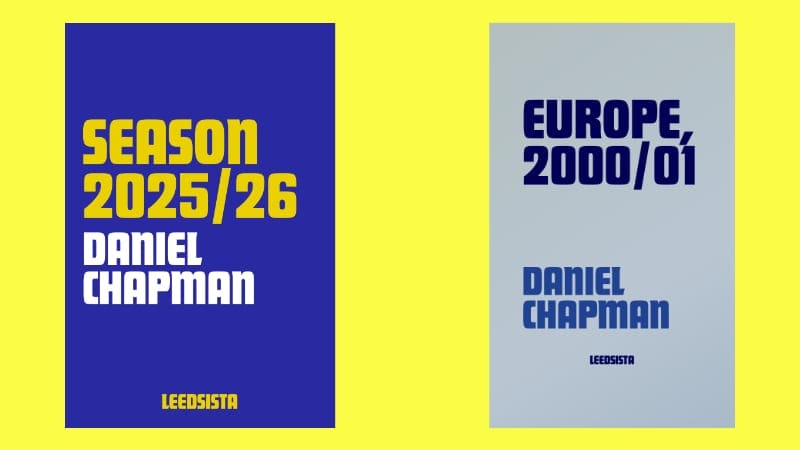
New books!
I've got two new books available:
Season 2025/26 collects all my writing from last season into one large format softback book, with photos by the brilliant Lee Brown. This is available for pre-order, and buying it now helps me order the right amount from the printers, so please don't delay!
Europe, 2000/01 brings the articles I wrote this year on the 25th anniversary of every Champions League match together in a pocket paperback format, 164 pages of (mostly) great memories. This is available now!
If you order both, you'll automatically get a £2 discount at the checkout.
Leedsista is entirely written by me, a human person, and entirely funded by people like you, Leeds fans, who think decent non-AI, non-clickbait writing about their football team is worth £3 a month to read or £5 a month to listen to the podcast version.
If you enjoy reading what I write, I hope you'll consider becoming a paying member to help keep it getting written.
Find out what you can get with a 30 day free trial:
Everything was going the Wilbur Cush way as 1957 became 1958. While winning a second Irish League title with Glenavon, and winning the Irish Cup and Gold Cup to make 1956/57 a treble season, he was voted Ulster Footballer of the Year. That prompted a £7,000 move to Leeds United in November.
Leeds were struggling. They'd built a new main stand but sold John Charles to pay for it, and after finishing 8th on their long awaited return to the First Division, they'd won just five games of the new season, compared to nine defeats, before Cush arrived. Not everyone was impressed with him: a Nottingham Evening News reporter described him as looking, 'what he really is, a pedestrian wing-half pitchforked into an inside forward position'. But his versatility was one of his strengths, and after his first goal ended Leeds' run of five consecutive defeats, he inspired an upturn in results and was named captain.
He was an ironic new hero for the Peacocks, a 5ft 4in 'pocket Hercules' taking over from 6ft 3in 'Adonis of a youth' John Charles in Elland Road's affections. His lack of height and creeping age — he was 29 — had put other English clubs off signing Cush. But he'd caught Leeds' eye in an international, when at centre-half for Northern Ireland he had tamed John Charles' attempts to lead the attack for Wales.
Cush had played all over the pitch for his country, but with the 1958 World Cup approaching he was being called upon to solve problems in attack and, typically, meeting the challenge. In December what should have been a World Cup qualifier against Italy was downgraded to a friendly when the referee and linesmen were stranded by fog on their way to Windsor Park, and Cush struck twice in a 2-2 draw. He also struck a few who had to be struck when the game turned into a riot at the end, helping teammates Harry Gregg and Danny Blanchflower protect the Italian players from hundreds of fans invading the pitch. The 'wee iron man', as Cush was known, would not permit that treatment to their guests — although there had been plenty of unfriendly treatment in the game itself.
Days ahead of the rearranged game in mid-January Cush announced his engagement, to 21-year-old shorthand typist, part-time model and Lagan Valley Beauty Princess of 1956, Joyce Reid. Then he promptly scored the decisive second goal in the 2-1 win over Italy that sent Northern Ireland to the World Cup. It was all coming for William Cush, aka Billy, aka Wilbur because the name stuck after a newspaper misprint. English First Division football, international goals, national acclaim, a glamorous fiancée, and now a World Cup.
To keep reading, please become a More to Read or More Listening member
Leedsista is supported by Leeds fans who think decent writing about their football team is worth £3 a month to read, or £5 a month for a podcast version.
Try free for 30 days.