Positive Action Movement: When Ken Bates took over his homeland in 1968, Noel Lloyd led the fight to take it back
'A lady came up by the name of Louella Harrigan and she said, "Regardless, we got to take back our country from Kenneth Bates, and whatever we’re going to do we’re going to march this morning, and we are going to take our country back! This lease must be revoked, and Kenneth Bates must go!”’
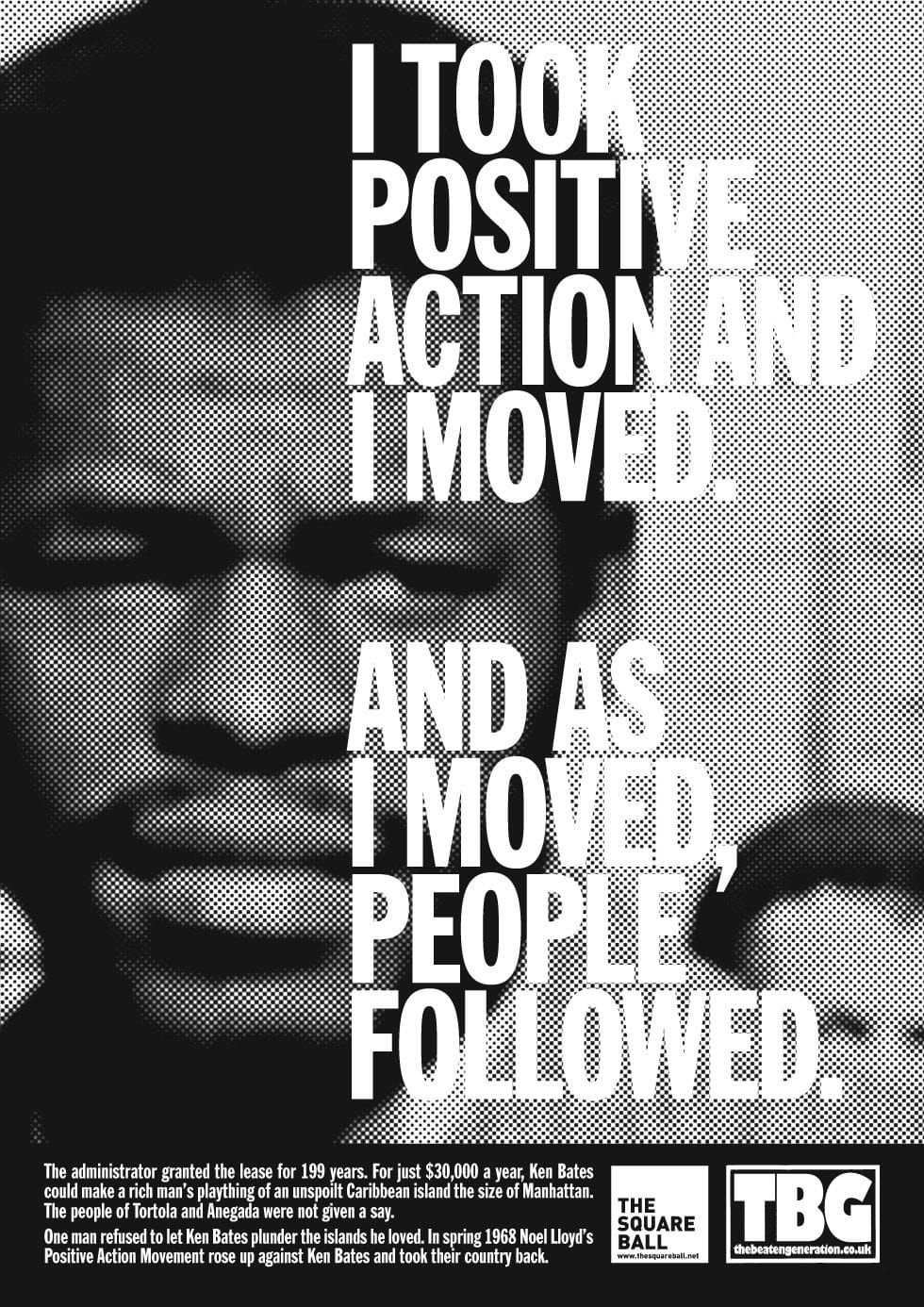
With no taxes or duties to pay, he could import cheap materials and labour, build until he could build no more, and not a single penny of the profits would be lost for 199 years. Kenneth Bates didn’t just have a lease on Anegada: he had the beginnings of an empire. Within his borders, however, Ken Bates also had Noel Lloyd.
(Noel Lloyd, Positive Action Movement • poster by The Beaten Generation)
The business past of current [at time of writing, in 2011] Leeds United chairman Ken Bates has been pored over many times in books and newspapers. There's the ready-mix concrete business that established his wealth, the controversial collapse of the Irish Trust Bank, his colourful entries into football at Oldham, Chelsea, Partick Thistle and Leeds. But one part of the Bates story has remained opaque.
Forty years ago and on the far side of the world from where football later made him famous, Ken Bates was set fair to make his fortune by developing a tourist and tax haven on the Caribbean islands of Tortola and Anegada. That was, until the venture collapsed and the British government bought him out.
The London Times described it as an “embarrassing state of affairs”, an understatement that has characterised the general treatment of the ‘affair’ ever since.
Now, though, thanks to a documentary film made by Andrea and Amanda Wilson and Jahphix TV of Tortola, and my own research for The Square Ball, we have a clearer picture: of the scale of what Bates was proposing for the islands, of the incredible fortune he stood to make, and of the man who inspired his fellow Tortolans to save their islands from Bates: Noel Lloyd.
Part One: Ken Bates, from Oldham to Rhodesia
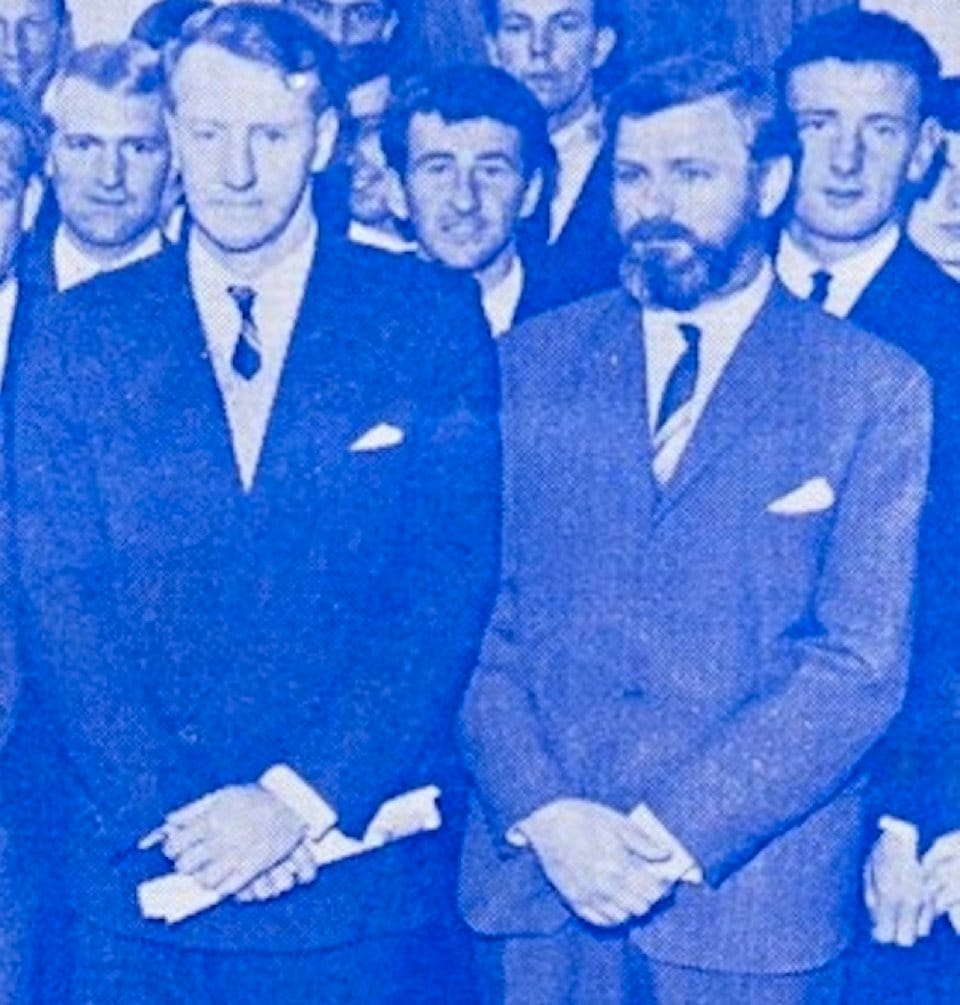
As he likes to remind readers of the Leeds United matchday programme, Kenneth William Bates was born in the early thirties, the era of the great depression, and had a hard and impoverished upbringing. After the early death of his mother and an injury to his father, Bates was separated from his immediate family and raised in London by his grandparents.
Humble beginnings did not hold Ken back, and by the mid-1960s he was enjoying the fruits of his first successes. Bates’ ruthless business acumen had taken him to Lancashire, where ready-mix concrete and his Howarth Construction company brought him a fortune and took him into the boardroom of Third Division football club Oldham Athletic, where he became chairman in 1965.
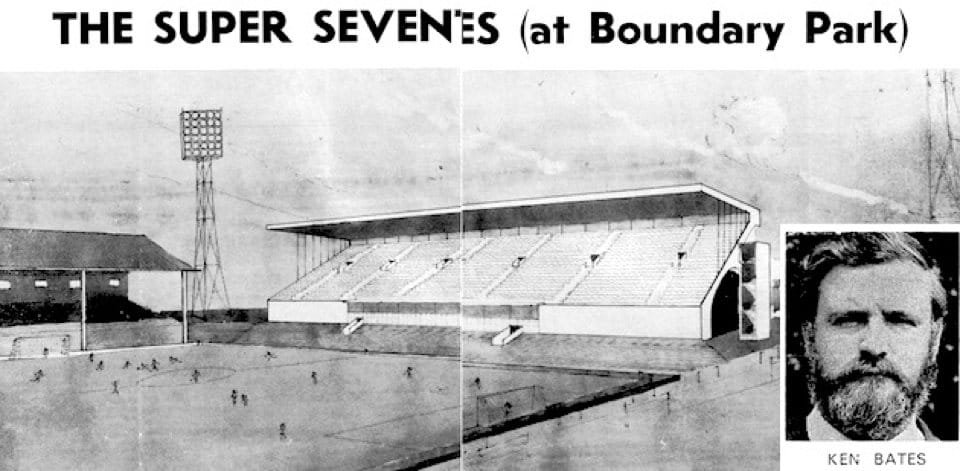
Bates’ aim was to galvanise the stricken club, and while he waited for manager Jimmy McIlroy to improve things on the pitch, Bates overhauled the facilities off it. £45,000 bought new seats, fresh paint, clean toilets and executive boxes to Boundary Park, and ticket prices were raised accordingly. Also to raise income, Bates disbanded the old Supporters Club and launched The Latics Tangerine Club in its place. The matchday programme became ‘The Boundary Bulletin’, where Ken boasted in his regular column that he would soon spend £180,000 on a super new stand which would incorporate an ‘exclusive 300 Club’, a French restaurant, a bowling alley and a discotheque. The ambitious chairman even launched a club radio station, ‘Radio Latics’, in 1967.
Bates was not confining his business interests to Oldham. In 1964 he established a new company, Batehill, that provided finance to small businesses. Batehill was backed by Philip Hill, Higginson, Erlangers Ltd. – which went on to become Hill, Samuel & Co. Ltd., one of the largest merchant banks in sixties London – and became part of Minerals Separation, a company selling “anything from carpets to Dalek suits.”
Keep reading for free
Join Leedsista to keep reading this and many more articles, free
- I'll send you new articles by email, for free
- You'll also get access to archive posts
- And a discount on these Leedsista mugs